
PlayDoz Is Live on iOS: One App, a Shelf of Puzzle Games, and a New Game Every Week
It has been a quiet couple of months on this blog. Not because nothing happened, but because too much did.
The short version: PlayDoz, my puzzle game collection, is now live on the App Store.
PlayDoz: Offline Puzzle Games on the App Store
One download, six games, no account, works offline. Flash Linez, Arrow, Dice Wars, Water Sort, Pupdoku, Nuts Sort. Hundreds of levels. Free.
If you have read this blog for a while, some of those names will look familiar. Dice Wars was the game I built in three days. Pupdoku and the others came out of the same “small app, small bet” thinking I have been writing about all year. PlayDoz is where they all live now, under one roof.
Apple Was Faster Than Google. I Did Not See That Coming.
I submitted to both stores at roughly the same time.
Going in, I had the usual mental model: Apple is strict and slow, Google is loose and fast. Everyone says this. I believed it.
The opposite happened.
Apple reviewed the app and approved it. Google Play is still sitting on the submission. Not rejected. Not approved. Just waiting.
I am not going to draw a grand conclusion from one data point. But it did reset my expectations. Apple’s process was strict, yes, but it was also legible. There was a queue, a status, a reviewer, a decision. Google’s process for a new developer account is a black box with no timer on it.
If you are an indie developer planning a two-platform launch, my honest advice now is: do not plan your launch date around Google Play. Ship on iOS when it clears, and treat Android as “whenever it arrives.”
The Boring Stuff That Took the Most Time
Getting the app into the store was maybe a third of the work. The rest was the kind of thing nobody writes tutorials about because it is too tedious.
I converted my personal Apple developer account into an organization account. That means applying for a D-U-N-S number, getting the company verified, and waiting through a process that has nothing to do with code. It is worth doing early. A personal account shows your own name as the seller. An organization account shows the company. If you are building a brand rather than a one-off app, you want the brand on the store listing from day one, not a migration later.
I built the website. playdoz.com is live. Every game in the app is also playable in the browser, and the web version already has a couple of extra titles (Tapix and Cattrail) that will land in the app in an upcoming update.
I connected the two. Your progress on the phone and your progress on the web are linked. Start a level on your commute, finish it at your desk. This part sounds small, but it is what turns a bundle of games into a product.
The Actual Plan: One or Two New Games Every Week
Here is the part I am most excited about.
PlayDoz is not a finished thing I shipped and walked away from. It is a container. The whole point of a collection is that it gets bigger.
Going forward, I am adding one to two new games every week. Each new game ships to the app and to the web at the same time.
That cadence would have been absurd for a solo developer two years ago. It is possible now because of AI, and because I finally stopped treating each game as a bespoke project.
The pipeline looks like this:
- Design the mechanic and the level rules
- Generate the art direction and assets with AI
- Build the game on the shared PlayDoz engine, so progress sync, settings, and the app shell come for free
- Ship to iOS and web together
Steps two and three are where AI does the heavy lifting. Step one is still me. That is the part I do not want to automate, because it is the part that decides whether the game is any fun.
I wrote earlier this year about using AI to build a content machine. This is the same idea applied to games. Not “AI makes the game.” Rather: AI removes enough of the repetitive work that a weekly release schedule becomes a normal week instead of a heroic one.
What Is Coming: Ten Games in the Pipeline
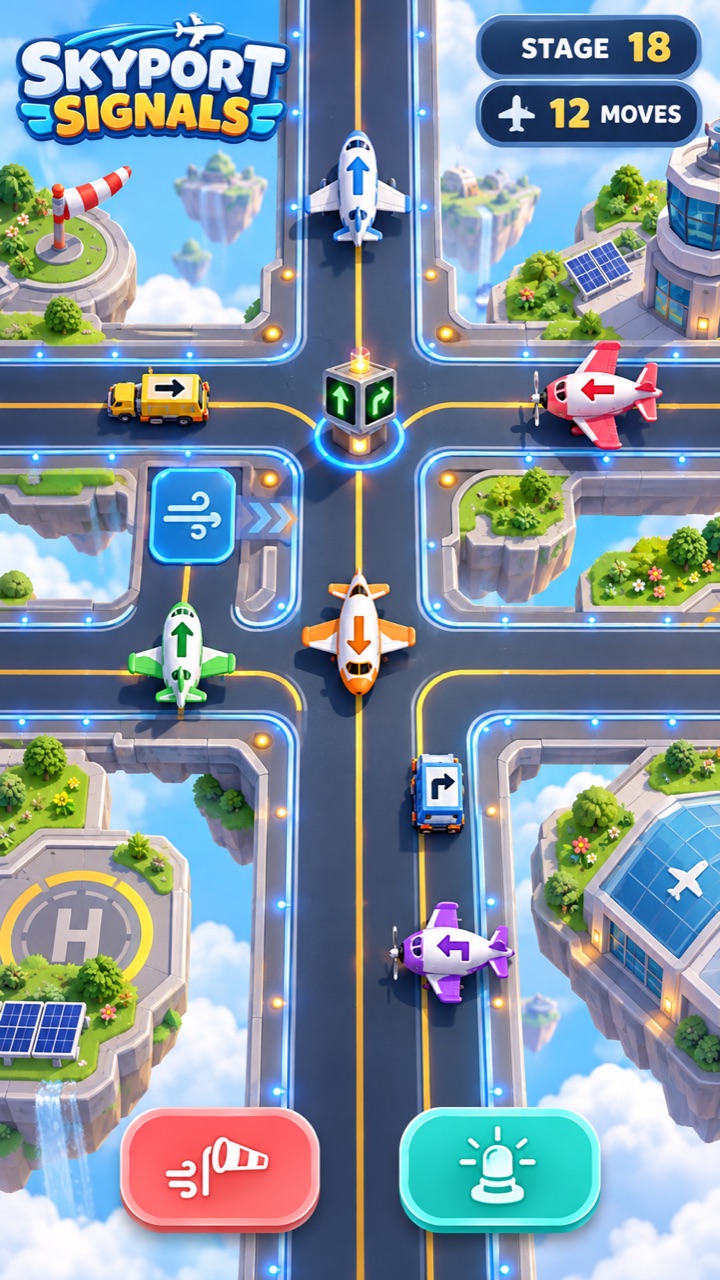
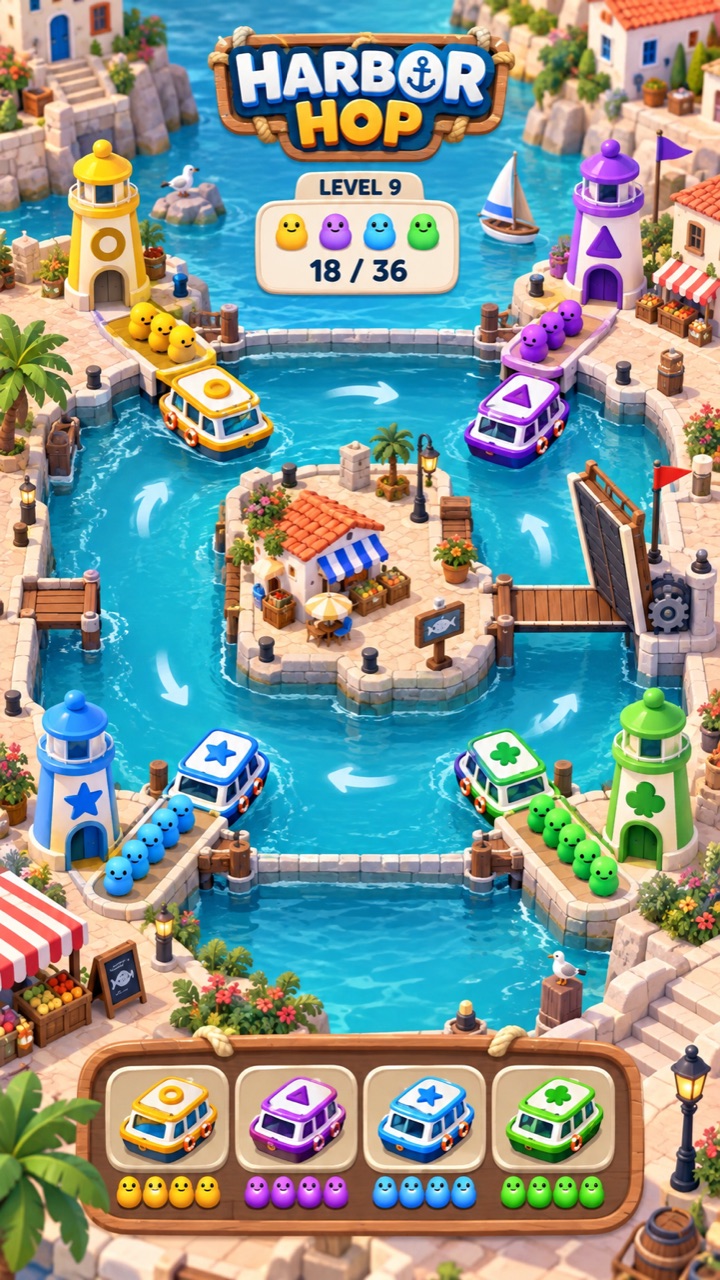
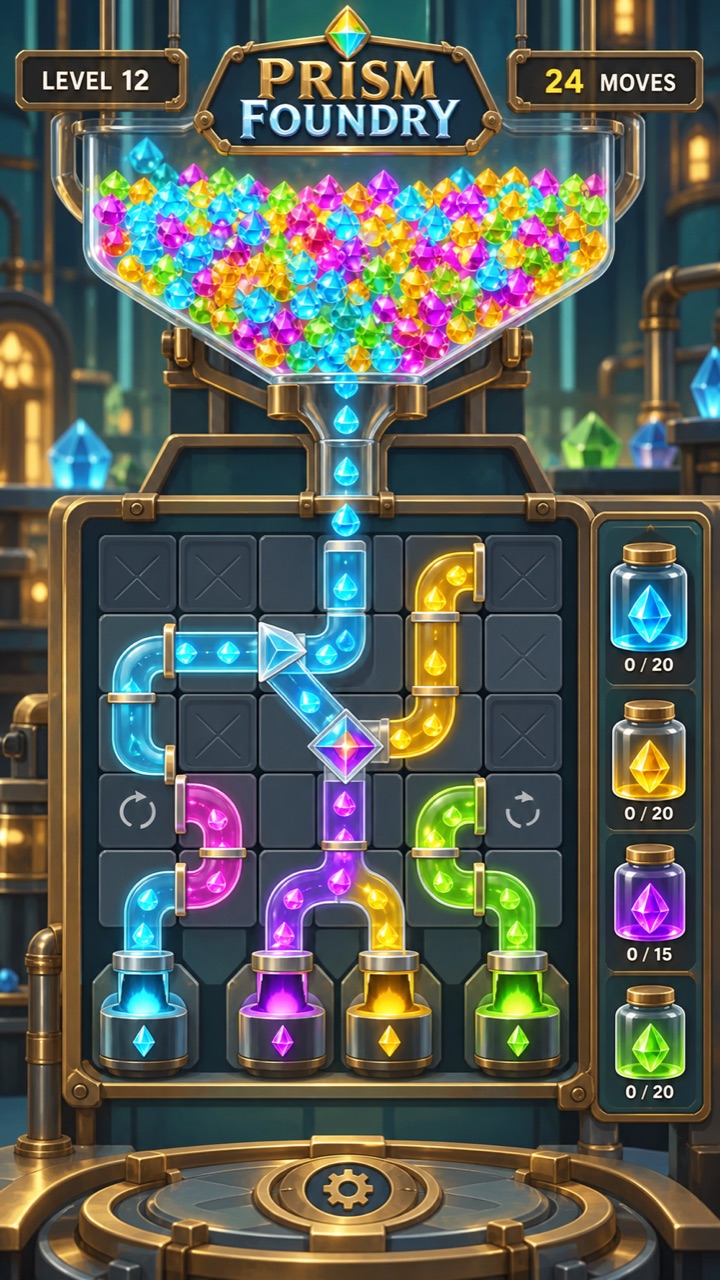
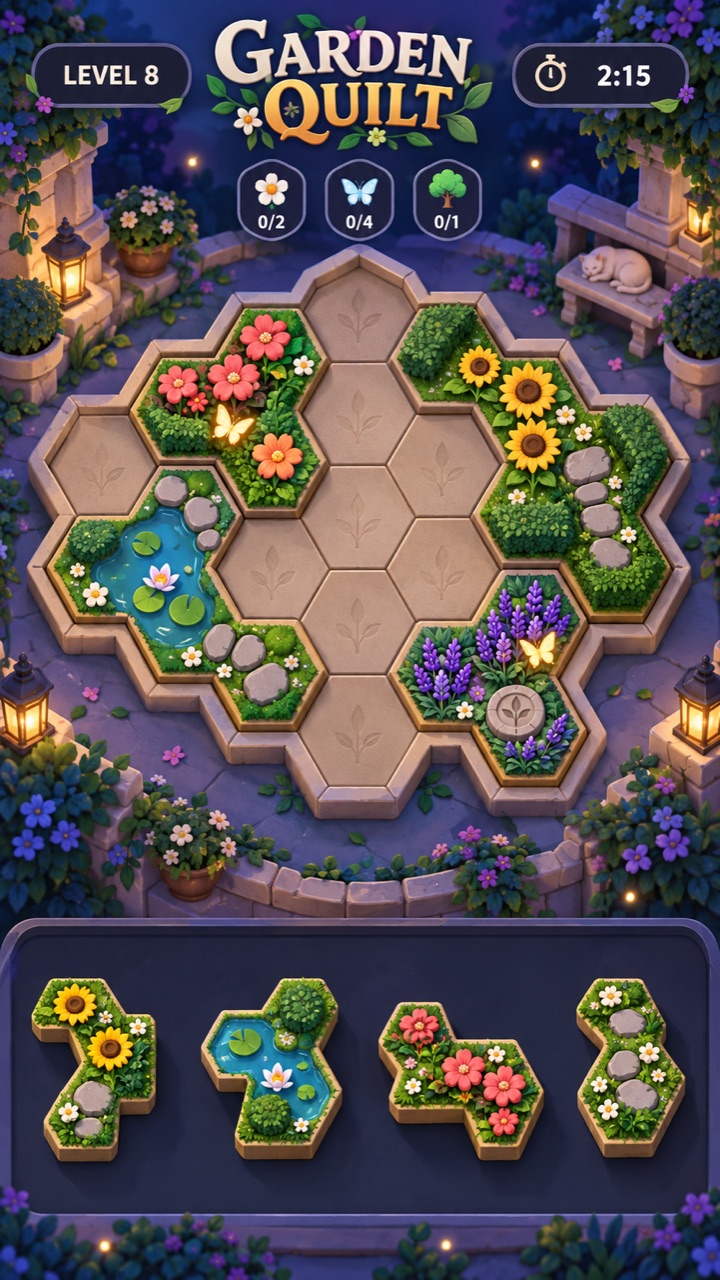
Ten new games are in production right now. Here are eight of them. These are actual in-progress screens, not concept art.
Skyport Signals. Route planes and trucks through a floating airport by switching the signals at each junction. Every plane has a direction it wants to go. Your job is to make sure nobody collides.
Harbor Hop. Four colors of passengers, four ferries, one busy harbor. Get everyone to the right lighthouse in as few trips as you can.
Prism Foundry. Gems pour in from the top. Rotate the pipes so each color reaches its own jar. A pipe puzzle with a steampunk coat of paint.
Garden Quilt. Fit hexagonal garden patches onto the board so the flowers, butterflies, and trees line up with the goals. Relaxing on the surface, surprisingly tight underneath.
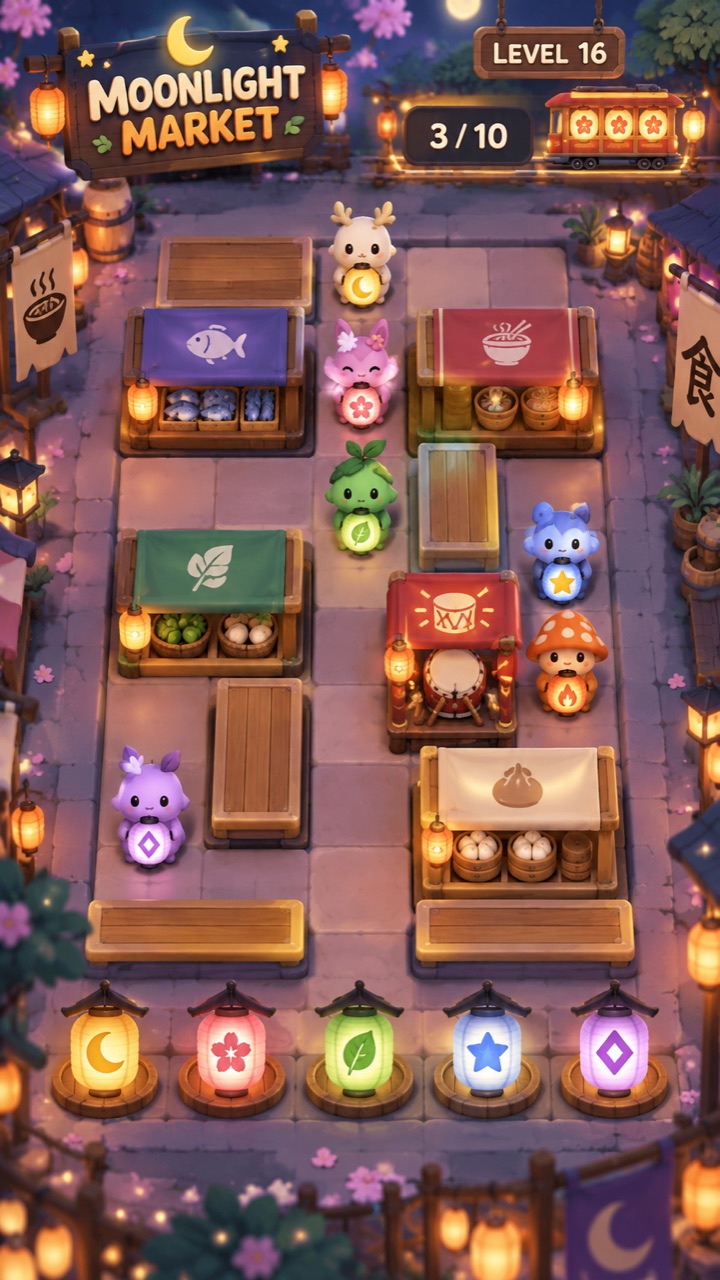
Moonlight Market. Night market, little lantern creatures, each one looking for its matching stall. Slide them through the crowd to get everyone home.
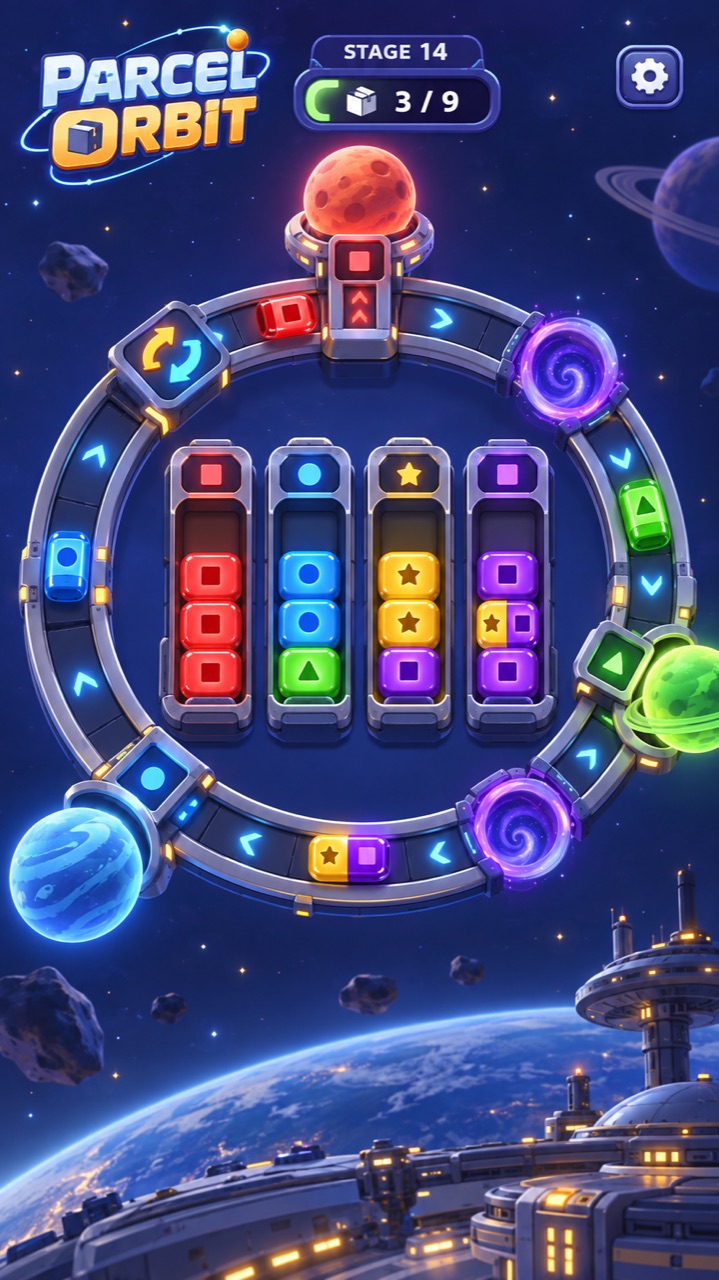
Parcel Orbit. Packages circle a space station on a conveyor ring. Sort them into the right containers before the ring fills up. A sorting game with a timing element.
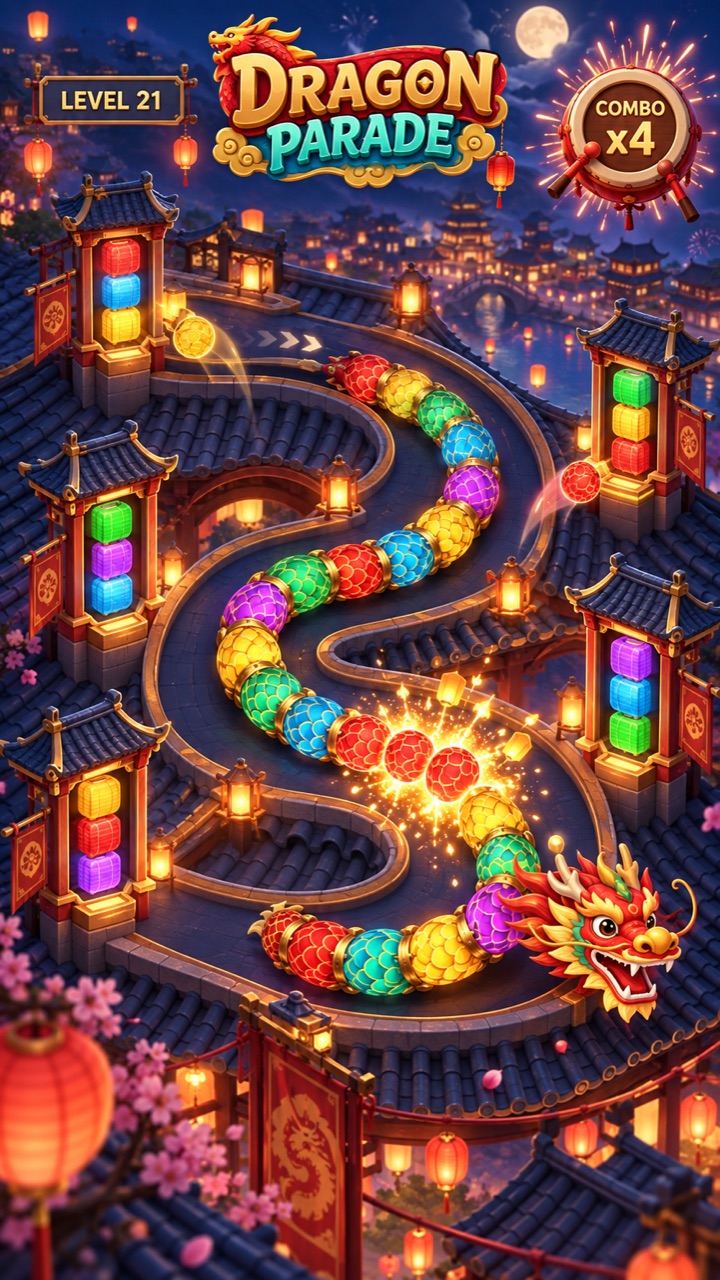
Dragon Parade. A chain of colored lanterns winds through a festival street. Shoot matching lanterns into the chain to clear it before the dragon reaches the end. Yes, it is a Zuma-style game. I have wanted to make one for years.
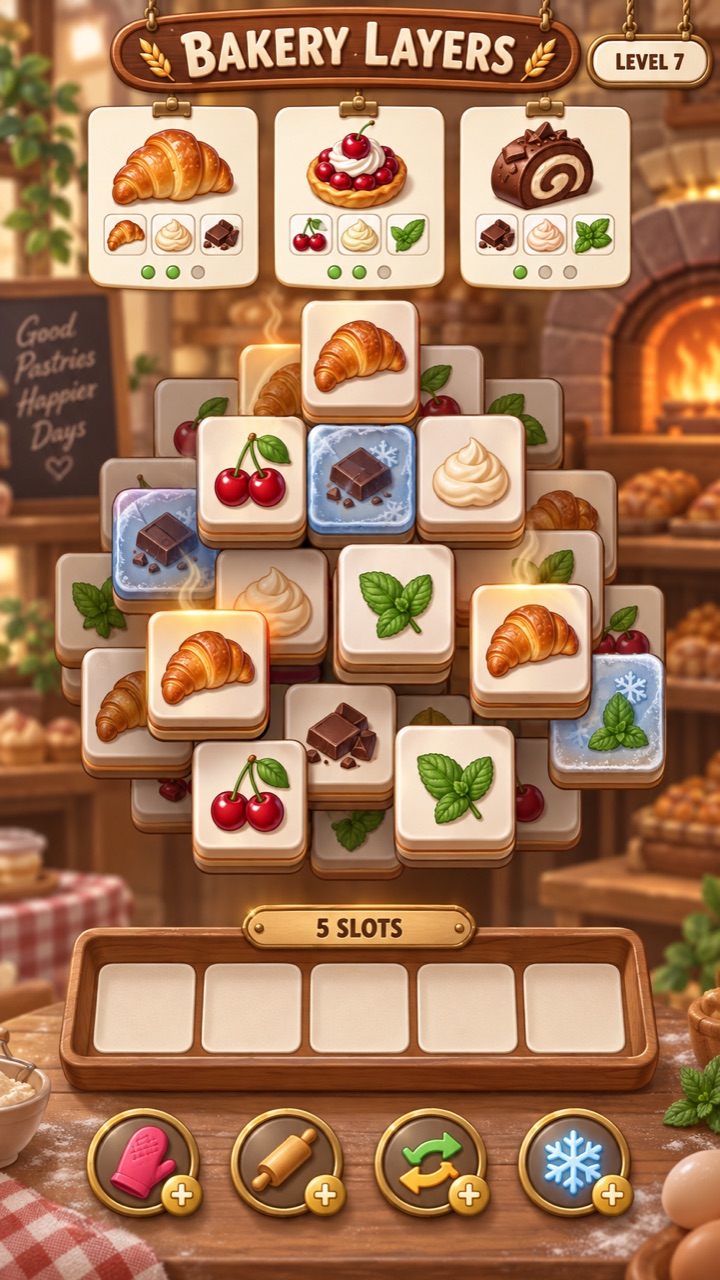
Bakery Layers. A stack of pastry tiles, five slots, three recipes to complete. Pick tiles in the right order to assemble each treat. Some tiles are frozen and need thawing first.
The other two are not ready to show yet.
Why a Collection Instead of Eight Separate Apps
I get asked this. The honest answer has three parts.
Distribution. Every new app on the store starts from zero: zero reviews, zero ranking, zero install base. Every new game inside PlayDoz starts with every existing PlayDoz user. The collection compounds. Separate apps do not.
Cost. One store listing, one review process, one privacy policy, one set of screenshots to maintain. Multiply that by eight and you have a part-time job that produces nothing.
Retention. A single puzzle game gets finished or gets boring. A collection that grows every week gives people a reason to come back that has nothing to do with notifications or streaks. There is simply a new thing in there.
The tradeoff is that the collection lives or dies on the cadence. If I stop adding games, it becomes just another bundle. So the weekly schedule is not a nice-to-have. It is the product.
What I Would Tell Myself Three Months Ago
- Submit to Apple first and do not wait for Google. The review order is not what the internet tells you.
- Set up the organization account before the first submission, not after. It is a separate multi-week process and it blocks things you will not expect.
- Build the web version alongside the app, not later. Having a link people can open without installing anything changes how you can talk about the product.
- Decide what you will not automate. For me it is game design. Everything downstream of that is fair game for AI.
PlayDoz is on the App Store and on the web at playdoz.com. If you try it, tell me which game you played the longest. That is the number I care about most right now.
Next week there will be a new game in there. And the week after that.